

Being fired unfairly isn’t just upsetting — it can leave deep and lasting marks on a person’s mental and emotional wellbeing.
In this article, I explore what psychological impact dismissals have when they are handled without transparency, respect, or care. Whether you’ve experienced an unfair dismissal yourself, or you’re an HR professional who has had to manage one, I invite you to read on.
Table of Contents
- What Is an Unjust Dismissal?
- The Hidden Harm: No Closure, No Explanation, No Humanity
- How Unjust Dismissals Affect Mental Health
- What Comes After the Door is Closed? The Ripple Effect of Unjust Dismissal
- Why Companies Still Use Unjust Disciplinary Dismissals?
- From Evidence to Action: Human-Centered
- Frequently Asked Questions
- Final Thoughts
- References
What Is an Unjust Dismissal?
Unfair dismissal, often referred to as wrongful termination, occurs when an employee is let go without clear, legal, or substantiated cause. For example, firing someone because of their race, gender, pregnancy or age is illegal, infringes on their employment rights, and is considered a form of workplace discrimination.
This type of dismissal typically lacks legitimate justification and may involve:
- Disciplinary firings with vague or exaggerated accusations
- Lack of a fair hearing or feedback process
- Absence of proper documentation
- Terminations motivated by bias, personal conflict, or retaliation
While lawful reasons for dismissal can include underperformance, misconduct, or redundancy, a dismissal becomes unfair when these reasons are misused or not backed by factual evidence. Importantly, a dismissal is not only unjust when it violates the law, but also when it fails to uphold dignity, transparency, and emotional responsibility.
The Hidden Harm: No Closure, No Explanation, No Humanity
While layoffs and restructuring are sometimes necessary in most of companies, unjustified dismissals — especially those disguised as disciplinary actions without proper justification — remain a widespread and harmful practice.

No chance to say goodbye.
No space to process what just happened.
The consequences go far beyond financial instability: they affect people’s emotional resilience, psychological safety, and even cognitive functioning.
For many, the most painful part of losing a job isn’t the loss itself — it’s the way it happens.
One day, everything seems normal. The next, you’re called into a meeting. A brief exchange. A letter. And just like that — it’s over.
And in the midst of this emotional shock, the affected person is expected to act fast — often with just 20 working days to consider legal action.
But let´s be honest…
– How many people, in that state of distress, can think clearly enough to respond?
– How many have the strength to challenge their employer when their confidence has just been shattered?
– How many can afford the cost of legal support?
Organizations are often fully aware of how these processes affect employees , and in many cases, they quietly benefit from them, not because they are just, but because they are rarely challenged.
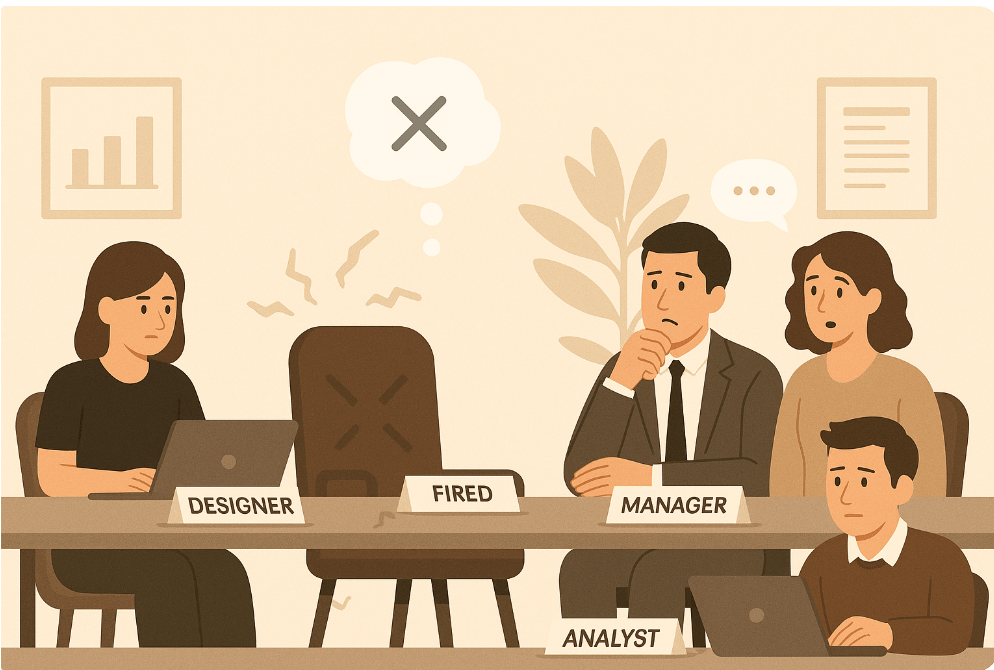
The psychological harm is worsened when companies resort to opaque or dehumanized practices. As highlighted in this Financial Times report (2024), the rise of “stealth layoffs” — dismissals veiled as performance issues or vague disciplinary actions. These tactics undeermine trust, strip away clarity, and leave employees in a state of confusion and shame.
How Unjust Dismissals Affect Mental Health
Scientific evidence confirms what many workers already know: how a dismissal is handled has lasting consequences for mental health.
A series of studies from researchers at Utrecht University explored the psychological and cognitive consequences of unjust dismissals. In one longitudinal study of 525 individuals who had lost their jobs involuntarily, those who were denied the opportunity to say goodbye, who felt the dismissal was abrupt or unfair, and who received no emotional or social support were significantly more likely to suffer negative outcomes.
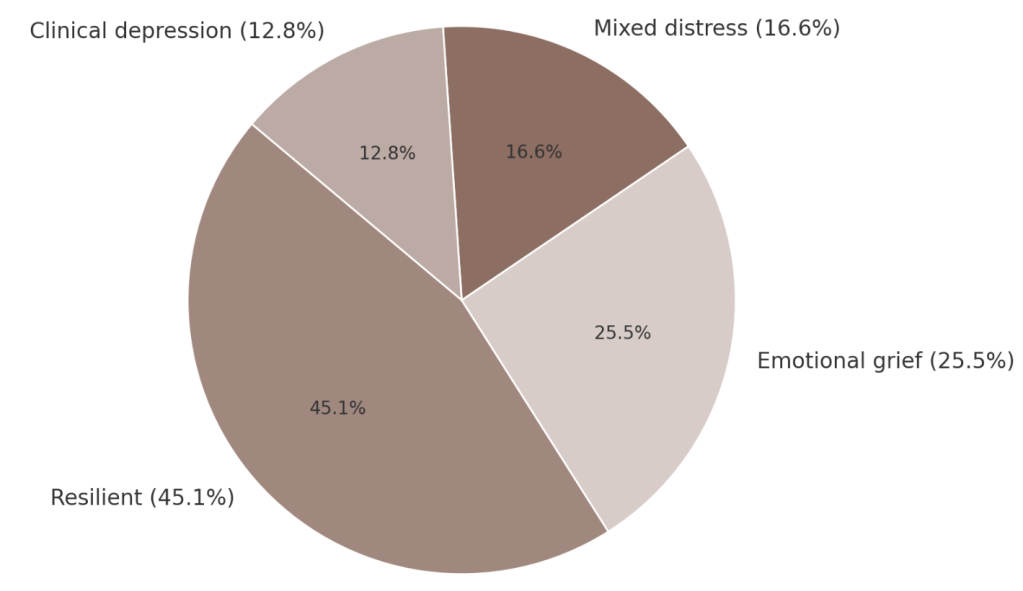
These outcomes are not isolated. As shown by Robbins et al. (2012), when people perceive injustice at work, their risk of developing burnout, chronic stress, and mental health disorders increases substantially.
In the context of dismissal, research proves that injustice often takes the form of vague accusations, lack of documentation, or sudden terminations framed as “disciplinary” to avoid severance obligations.
What Comes After the Door is Closed? The Ripple Effect of Unjust Dismissal
The effects aren’t just emotional. A 2024 study by Van den Bergh et al., shows that involuntary job loss also impairs cognitive functioning — particularly when the dismissal is perceived as unfair or dehumanizing. The researchers identified two critical systems affected:
- Cognitive control — the ability to focus, adapt, and regulate emotions
- Effortful control — the capacity to manage stress and suppress intrusive thoughts
When these systems weaken, individuals are more prone to rumination, emotional dysregulation, and long-term psychological distress. These outcomes often extend beyond the individual, undermining psychological safety across entire teams and organizations.
And that brings us to another overlooked consequence: the emotional toll on the remaining employees.
When workers witness a colleague being dismissed unfairly it can generate a ripple effect of fear, anxiety, and distrust. Employees may start to question their own job security and lose confidence in leadership.
This response is backed by two psychological theories:
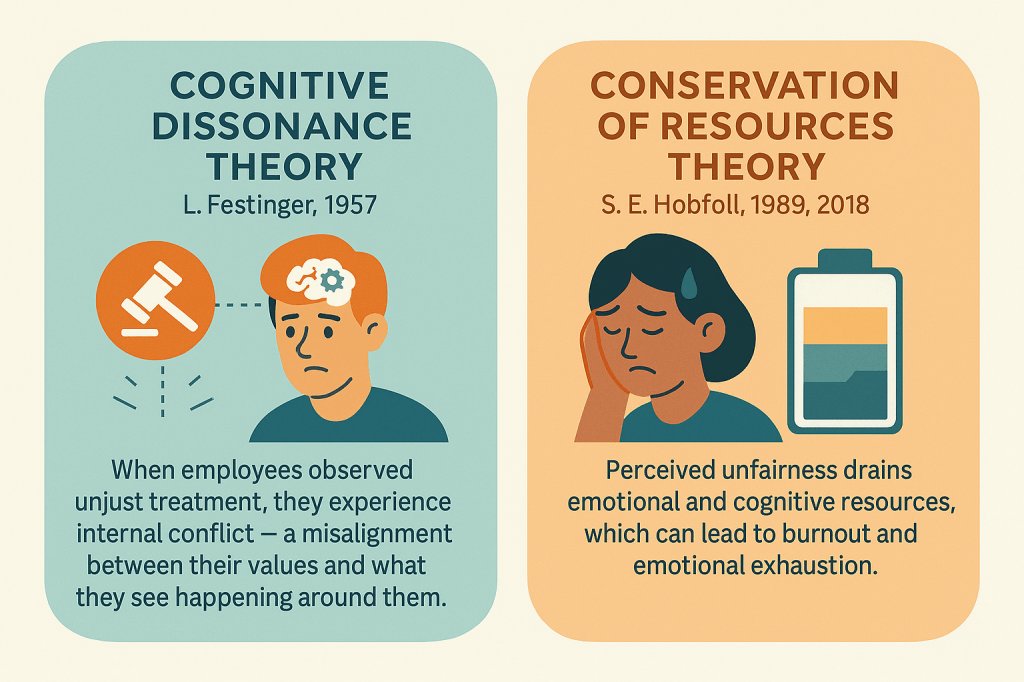
In short, a single unjust dismissal can damage not only one life, but the broader emotional climate of a workplace. Addressing these issues isn’t only about fairness — it’s about preserving the well-being of an entire organization.
Why Companies Still Use Unjust Disciplinary Dismissals?
There are four recurring reasons that help explain this choice — not always ethical, but often convenient:
💸 1. Cost Avoidance
By labeling a dismissal as “disciplinary,” companies can often bypass severance pay, notice periods, and other legal obligations. It’s a cost-cutting strategy that, while efficient on paper, comes at the expense of dignity and mental health (Financial Times, 2023).
⚡ 2. Perceived efficiency
Disciplinary terminations are often perceived as faster and more convenient than formal restructurings or negotiated exits — particularly during internal changes or budget cuts. As noted in a 2024 Business Insider article while “stealth firing” may offer short-term efficiency, it often undermines morale, trust, and organizational culture over time.
📉 3. Lack of managerial training
Many managers are not equipped with the knowledge or tools to handle dismissals properly. As explained by Okolie and Udom (2019) review, without clear HR support or legal understanding, dismissals can be mismanaged — even with good intentions — and end up being experienced as abrupt, unjust, or emotionally damaging.
⚖️ 4. Fear of legal risk
Some companies frame dismissals as disciplinary to avoid litigation. But if challenged, poorly documented cases or vague accusations can backfire, exposing them to greater reputational and legal damage (Watkins, P., 2024).
From Evidence to Action: Human-Centered
If the research makes one thing clear, it’s this: the way you handle a dismissal can either protect or damage mental health — not just for the person leaving, but for everyone who stays.
Ethical offboarding isn’t an optional extra. It’s a leadership responsibility.
The following recommendations distill research-based practices to ensure that dismissals are handled ethically , which means protecting both, employee well-being and organizational integrity.

Frequently Asked Questions
What’s the difference between a lawful and a fair dismissal?
A: A dismissal can be legally valid but emotionally harmful or procedurally flawed. Fairness includes communication, transparency, and respect.
What are the main mental health risks for the person dismissed?
A: Research links unjust dismissals to heightened grief, anxiety, depression, rumination, and emotional dysregulation. They can also impair cognitive functions like focus, memory, and decision-making, making it harder to recover professionally.
Why don’t more employees fight back against unjust dismissals?
A: Because they’re often emotionally shocked, financially unprepared, or unaware of their rights — a combination that works against them.
How can companies avoid unjust dismissals?
A: By training managers, documenting concerns, offering feedback loops, and planning dismissals with honesty and clarity.
What’s the psychological impact on the rest of the team?
A: Witnessing a colleague’s unfair dismissal can cause stress, lower morale, and reduce psychological safety across the organization.
Can companies prevent unjust dismissals entirely?
A: While not every dismissal can be avoided, companies can ensure the process is transparent, respectful, and well-documented. This reduces legal risk and protects both individual and organizational well-being.
Final Thoughts
Thank you very much for reading the full post!
Whether you’ve been unjustly dismissed or had to deliver that news yourself, you know the impact runs deeper than a legal document. These moments can change people, teams, and organizations.
If this resonates with you, I’d like to hear your perspective.
Share your experiences, insights, or questions.
And if your organization wants to rethink how it handles dismissals with dignity and integrity, let’s connect.
Your stories matter — they’re the first step toward change.
References
Festinger, L. (1957). A Theory of Cognitive Dissonance. Stanford, CA: Stanford University Press.
Financial Times. (2023). The rise of stealth layoffs. https://www.ft.com/content/0da37050-3c85-430d-bc1e-c52e9de44503
Okolie, U.C., & Udom, I.D. (2019). Disciplinary Actions and Procedures at Workplace: The Role of Hr Managers. Journal of Economics and Management Research. DOI:
10.22364/jemr.8.06
Robbins, J. M., Ford, M. T., & Tetrick, L. E. (2012). Perceived unfairness and employee health: A meta-analytic integration. Journal of Applied Psychology, 97(2), 235–272. https://doi.org/10.1037/a0025408
Van den Bergh, N., Ceccarini, F., Vrancken, L., Smets, K., & Baeken, C. (2024). Psychological effects of unemployment: A prospective study on cognitive control, emotion regulation, and distress. Comprehensive Psychoneuroendocrinology, 17, 100210. https://doi.org/10.1016/j.cpnec.2024.100210
Van Eersel, J. H. W., Taris, T. W., & Boelen, P. A. (2021). Grief reactions, depression, and anxiety following job loss: Patterns and correlates. European Journal of Psychotraumatology, 12(1), 1905348. https://doi.org/10.1080/20008198.2021.1905348
Van Eersel, J. H. W., Taris, T. W., & Boelen, P. A. (2022a). Job loss-related complicated grief symptoms: A cognitive-behavioral framework. Frontiers in Psychiatry, 13, 933995. https://doi.org/10.3389/fpsyt.2022.933995
Van Eersel, J. H. W., Taris, T. W., & Boelen, P. A. (2022b). Negative cognitions and emotional distress following job loss: Development and validation of the Beliefs About Loss of Work (BLOW) scale. Journal of Cognitive Therapy, 15, 191–208. https://doi.org/10.1007/s41811-021-00126-6

 Cristina Gil López, PhD